Camouflage isn't printed on.
It's bonded into the fabric.
Sublimation is the only printing method that produces edge-to-edge custom patterns with photographic detail. Unlike screen printing or pigment printing, the dye doesn't sit on the surface of the fabric — it converts to gas under heat and pressure, then bonds permanently into the polyester fibre. The result: print so durable the fabric will fade before the pattern does.
For hunting apparel, this matters because the alternative methods all have limits. Screen printing caps at 6–8 spot colours and can't do photographic gradients. Pigment prints sit on top of the fabric and crack with wear. Dye-cut camo fabric locks you into one supplier's pattern library. Sublimation gives you complete design freedom — any pattern, any colour count, any size of repeat.
The one hard constraint is the base cloth: the dye only bonds into polyester. Our fabric library shows which families take sublimation and which have to be printed another way.
We run sublimation entirely in-house on Mimaki and Mutoh printers, then heat-transfer onto cut panels before sewing. You design the camo. We build the garment.
If you are developing a pattern rather than supplying a finished one, our guide to custom camo pattern development covers scale, repeat, the strike-off step and the four things that most often go wrong.
Choosing between print methods rather than patterns? Screen print, DTF, sublimation and embroidery compared sets out what each one physically cannot do — and whether a licensed pattern or your own artwork is the better commercial call.
Eight pattern families
we print every week.
Hover any pattern to see what it's used for. Bring your own camouflage design, or work from one of our base templates — both options are equally common.
Six things sublimation does best.
When sublimation is the right answer — and when it isn't. Six common hunting-apparel use cases we run weekly.
Full-Coverage Camo
Edge-to-edge custom camouflage pattern across the entire garment — front panel, back panel, sleeves, hood — perfectly aligned at the seams.
Photographic Gradients
Smooth dye-blend transitions from light to dark across a single panel — what screen printing physically cannot do without colour banding.
Multi-Colour Designs
No colour limits. Print 6, 12, 24 or 256 colours in a single design without per-colour set-up cost. Each garment in your run can even be different.
Pantone Matching
Brand colours matched against the Pantone Solid Coated and Pantone Fashion & Home libraries — colour-managed end-to-end with X-Rite calibration.
Wash-Permanent
Dye is gas-bonded into the polyester fibre — it doesn't fade, crack, peel or wash out. 50+ wash cycles tested per AATCC 61 with zero visible degradation.
Same Pattern Across SKUs
Print the same custom camo on your jacket, pants, hat, gloves and gear bag. Single brand identity across the full product line — fabric-locked, not heat-transferred.
From artwork
to printed panel.
Artwork Receipt & Prep
Buyer sends artwork in AI, EPS, PSD or high-res PNG/TIFF. Our design team verifies resolution (min 150 DPI at print size), colour profile (RGB or Pantone), and pattern repeat tile-ability.
Colour Management
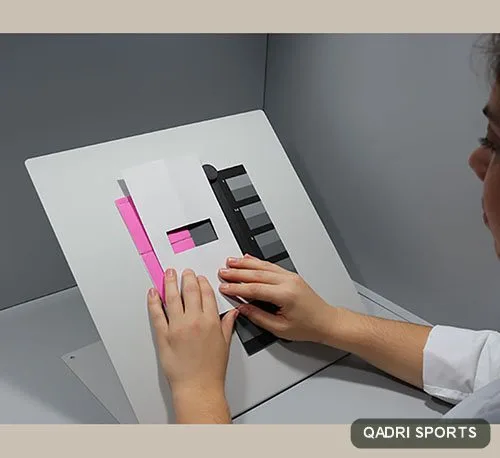
Colours converted to our calibrated CMYK profile via X-Rite ColorChecker. Pantone references matched within ΔE < 2.0. Customer-approved colour proof printed and couriered for sign-off.
Strike-Off Sample
A1-size fabric strike-off printed on the exact production fabric. Buyer approves the actual on-fabric colour (always slightly different from screen) before we commit to bulk paper rolls.
Panel Print Plan
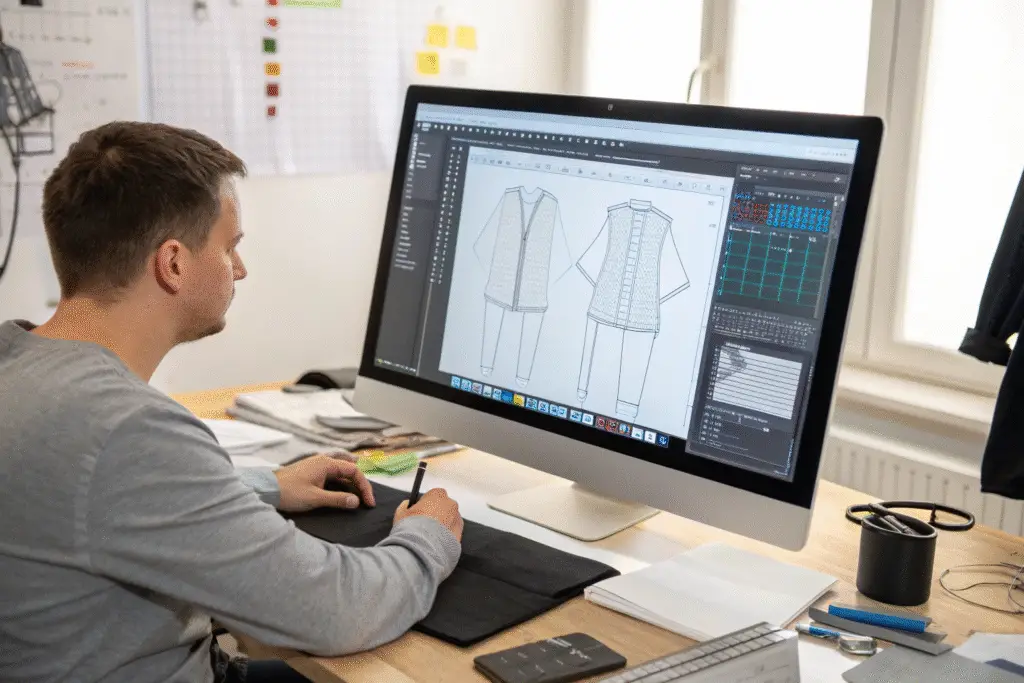
CAD operator lays out the print marker — pattern aligned to garment panels, repeat optimised, seam-matching prepared. The marker is what guarantees the camo flows continuously across cut pieces.
Print & Transfer
Mimaki / Mutoh prints the design onto sublimation transfer paper at 1440 DPI. Paper is then aligned to white polyester fabric and heat-pressed at 200°C for 35 seconds — dye sublimates into the fibre.
QC & Cutting
Printed fabric inspected for ink coverage, alignment and colour consistency. Approved rolls move to CAD cutting; rejected rolls return to print queue. Bulk panels then proceed to sewing.
Print capabilities.
Why sublimation = brand IP.
Own Your Pattern
A custom-printed camo is your intellectual property — not licensed from Realtree or Mossy Oak. No per-piece royalties. No risk of a competitor licensing the same pattern.
Premium Pricing
A unique camouflage pattern supports a premium retail price. A licensed pattern competes on price with every other brand using the same camo. Sublimation protects your margin.
Faster Iteration
No screen-printing set-up fees per colour. No dye-mill MOQs for a new pattern colour. Want to try a new variant for next season? Print 30 pieces, test, iterate. Repeat.
When sublimation
isn't the right answer.
Sublimation only works on polyester fabrics (≥ 85% poly content). Cotton-heavy fabrics, wool, leather, and natural-fibre canvas cannot be sublimated — the dye won't bond. For those materials we use screen printing, pigment printing, or pre-dyed fabric sourcing instead.
Sublimation also requires a white or very light base fabric. The dye is translucent — it tints the fabric, it doesn't cover it. You can't sublimate light colours onto a dark fabric. For dark-base requirements, we use either pre-dyed fabric in the base colour, then screen-print accents, or we sublimate on white and then over-dye selectively.
Finally, sublimation is not ideal for very small text or fine line work below 4pt. The heat-press process introduces slight pixel-level spread (typically 0.1–0.2mm). Logos and brand wordmarks generally embroider better than print.
Questions about custom camo.
Can I print my own camouflage pattern instead of licensing one?
What fabrics can be sublimation printed?
Can you sublimate onto dark fabric?
How accurately can you match my brand's Pantone colours?
Will a sublimated camo pattern fade or crack?
What is the minimum order for custom printed camo?
Is sublimation suitable for logos and small text?
Printing hunter orange instead? See the blaze orange line. Minimums across every service start at 30 pieces.
Other production steps.
Own your camo.
Send your pattern artwork — we'll quote sublimation print + garment manufacturing as a single package, with a free strike-off sample for sign-off.
Request Print Quote →