What twenty-five departments actually mean for your order
Photographs of a factory floor are easy to produce and easy to borrow. What is worth looking at is which operations happen under one roof, because that is what decides how quickly a problem gets found and who has to fix it.
Why in-house matters more than square footage
When cutting, printing, embroidery, stitching and finishing sit in separate businesses, every handover is a place where a garment can wait, get damaged, or come back wrong — and a place where responsibility becomes negotiable. A shade that drifts between a printer and a sewing unit is nobody's fault by the time it reaches the buyer.
Running those operations on one site means a fault is found in the building where it was made. The fabric store and accessory store at the front of this list are the least photogenic departments here and two of the most important: stocked fabric and stocked trims are the reason a 30-piece order is possible at all, because nobody is waiting on a mill minimum to start.
The four stages, and what each one protects
- Design and materials — tech pack, pattern development, costing, and the fabric and trim actually being in the building. This is where a specification becomes buildable, and where an unrealistic brief gets caught before it costs anything.
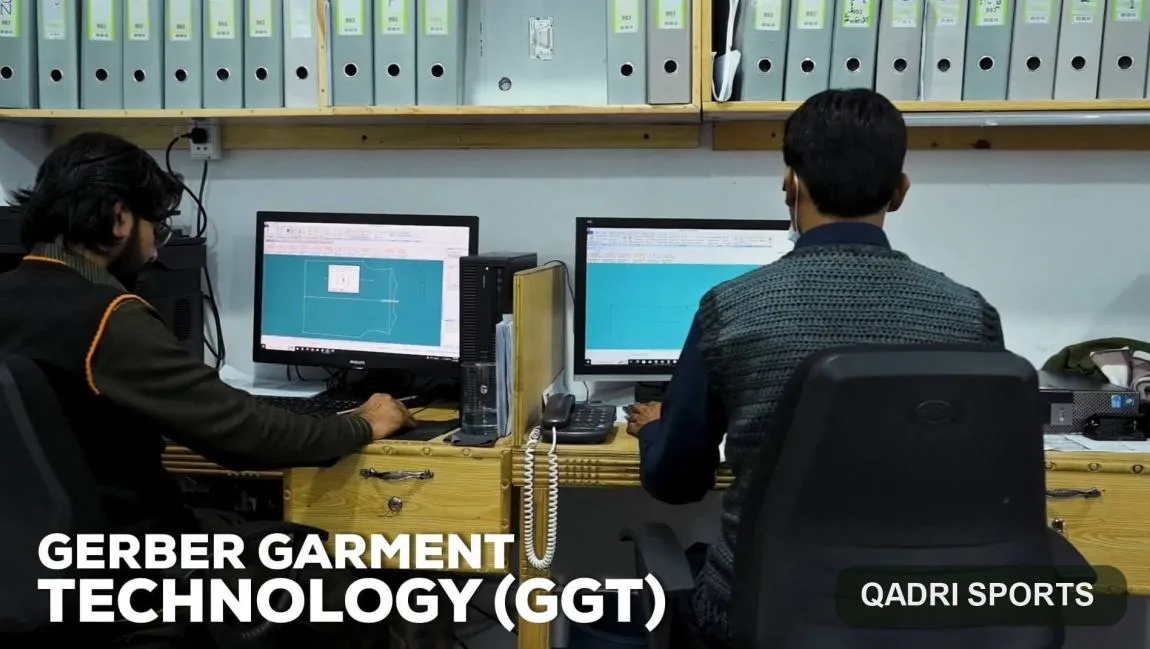
- Production — CAD marker making and cutting, sublimation and screen printing, laser cutting, embroidery, then the stitching and assembly lines. Cutting is the irreversible step; everything before it is still an opinion.
- Quality and testing — labelling, in-house lab checks on strength and shrinkage, shade verification under standardised lighting, in-process inspection and a final AQL check before shipment. Shade verification exists because colour judged under the wrong light is the single most common reason a bulk run is rejected.
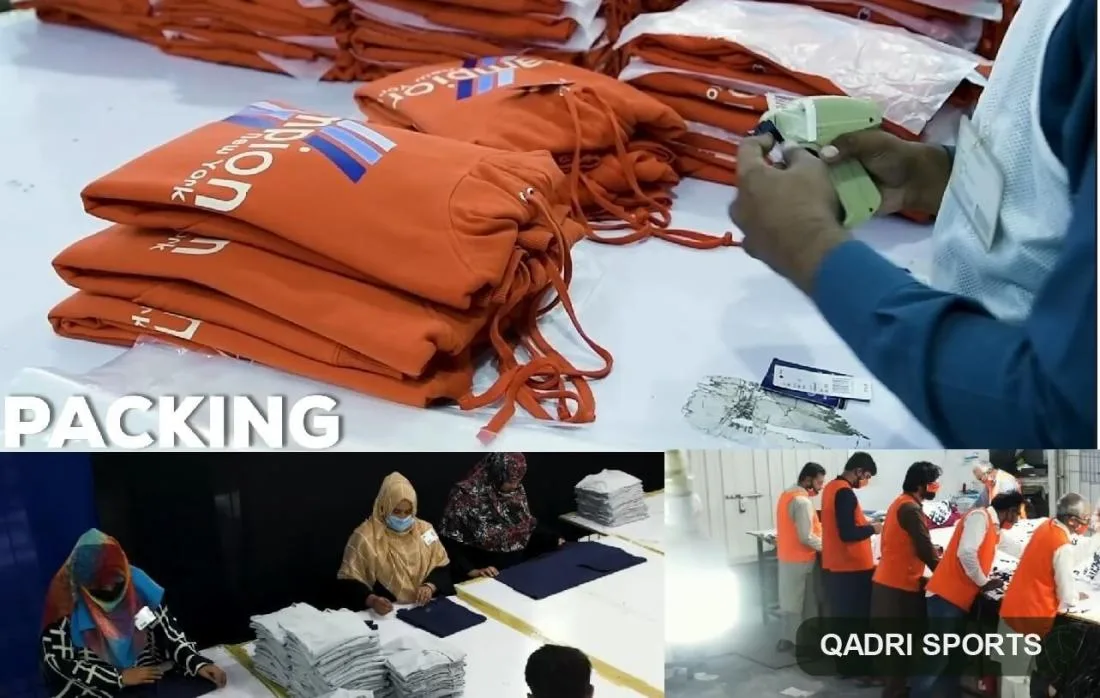
- Packing and export — poly-bagging and carton packing to your specification, warehousing, and export documentation handled in-house rather than handed to a third party who has never seen the goods.
What to ask any factory, including this one
A tour is only useful if you know what to look for. Three questions separate a working floor from a showroom:
- Is the work in progress on the tables the kind of product you are asking for? A factory full of promotional t-shirts is not the place for a taped-seam membrane jacket, whatever the website says.
- Who inspects, and when? A single inspection at the end tells you about problems that are already several hundred garments old. Ask what happens at cutting and during stitching.
- Ask for a live walk-through, in one continuous shot. Anyone can photograph a tidy corner. We will do this on request — the same departments, on the day you ask, running.
We have written the wider version of this as a checklist in how to vet a private label manufacturer, including the parts that are uncomfortable for us to publish.
Documentation, not adjectives
Every order produces an inspection record with photographs at each stage, and bulk is measured against the sample you approved rather than against anyone's memory of it. Our three-stage inspection sets out where those checks happen, our in-house lab covers what is tested and to which standard, and our registration and certification status lists what we hold and — just as importantly — what we do not yet.