Shooting Products.
Browse our shooting apparel — every piece private label, manufactured under your brand from 30 pieces.
Loading products…
Vests for every discipline.
A shooting vest is a precision tool — the recoil pad position, the cartridge-pocket depth and the shoulder cut directly affect a shooter's mount and comfort. We build all of it to your spec.
Trap, skeet, sporting clays or field — we develop and produce under your label, with padded recoil shoulders, cartridge pockets, mesh ventilation and your branding. Nothing carries our name.
Send a sample vest, a sketch or a tech pack — we reply within 24 hours with fabric options and a per-piece quote.
Built for the range.
Everything is decided by
how the gun comes up
A shooting vest is judged on one movement repeated a few hundred times a day. If the gun snags on the way to the shoulder, nothing else about the garment matters.
The mounting side must be smooth and flat. No seam ridge, no pocket edge, no zip pull, no logo patch anywhere in the path the stock travels. This is the reason a shooting vest is built differently from every other vest in a range, and it is the first thing an experienced shooter checks.
The recoil patch position is personal, not standard. Too low and the stock lands above it; too high and it fouls the collarbone. A patch that runs from the collar area down past the natural pocket of the shoulder covers the variation between shooters, which is why competition vests use a generous patch rather than a small pad.
Patch material changes the mount. Suede and leather grip the stock and hold it in place — preferred by shooters who want a repeatable, locked-in mount. A smoother synthetic lets the stock slide into position, which suits shooters who mount from a low gun and want the last few centimetres to self-correct. Neither is better; they suit different disciplines and different habits. Specify which you are building.
Handedness is a production decision. A single-side patch has to be made in left and right versions, which doubles your SKUs and splits your stock. An ambidextrous vest with patches on both shoulders removes that problem entirely and is what most modern club ranges buy — at the cost of a slightly heavier front. Decide before sampling, because it changes the pattern.
Trap, skeet and sporting
are not the same vest
They look similar on a hanger and they are used completely differently. Building one vest for all three is the most common brief we are asked to correct.
Trap. The shooter stands still, the gun is usually pre-mounted, and the target goes away. The vest can be cut closer, the patch sits higher because the gun starts in the shoulder, and the pockets matter less than the consistency of the mount. Fit is the priority.
Skeet. Stations move around a semicircle and targets cross in both directions, so the shooter swings hard through a wide arc. That demands freedom across the back and shoulders, and pockets on both sides so shells are reachable regardless of which way the body is turned. The patch sits slightly lower, because many skeet shooters start from a low-gun position.
Sporting clays. A walked course, often several hours, in whatever weather the day gives. This is the vest that has to breathe, carry more shells, take a water bottle, and survive being worn all day rather than for a 25-bird round. Roomier cut, full mesh back, larger hull pockets.
Field and driven game is a fourth product again — closer to a hunting vest, with game pockets, weather resistance and often a blaze requirement. It is worth being explicit with buyers that it is not a clay vest with pockets moved around.
Shell pockets are worked
without looking
The shooter's eyes stay on the stand. Every pocket on a shooting vest is operated by feel, and that single fact drives the whole design.
The opening has to stay open. A pocket mouth that collapses when the vest is worn means fumbling. A stiffened or bound top edge holds the shape so a hand goes straight in.
Depth is a real specification. Too shallow and shells tip out when the shooter bends to pick up a hull; too deep and the last few are hard to reach. State the internal depth rather than describing the pocket as "large".
Separate the live shells from the empties. A dedicated hull pocket — usually mesh so it drains and so the shooter can see it is full — stops spent cases mixing with loaded ones. Its absence is a frequent complaint on cheaper vests.
Divided or open. A divided pocket holds shells upright and lets the shooter take two at a time by feel; an open pocket holds more and is faster to fill. Competition shooters usually want the first, casual shooters the second.
Weight has to sit where it does not pull. A vest loaded with two boxes of shells on the front will drag the shoulders forward unless the yoke spreads that load. On a walked sporting course this is the difference between hour one and hour four.
Sized over a layer,
not over a shirt
The vest is worn over changing layers. Summer means a polo; winter means a jumper or a fleece. A vest graded over a t-shirt is unwearable in November. Side adjuster tabs — laces, straps or elastic panels — let one size cover both, and they are the single most useful feature on a club vest.
Armhole height decides the swing. A high, clean armhole lets the arm rotate freely; a low armhole binds at exactly the moment the shooter swings through a crossing target. It is a pattern decision that costs nothing and is felt on every shot.
Fabric depends on where it is worn. Cotton drill and poly-cotton are the traditional club fabrics — quiet, comfortable and hard-wearing. Full mesh bodies are for heat. Quick-dry synthetics suit summer competition circuits where the vest is worn all day and washed often. The families we hold are set out in the fabric library.
Colour is often not free. Some competition formats have rules about what may be worn, and club and team programmes frequently specify their own palette. We build to whatever you specify — but confirm any competition dress requirement with the governing body for your discipline rather than with us.
Typical build spec.
Made entirely yours.
Common questions.
More of what we make.
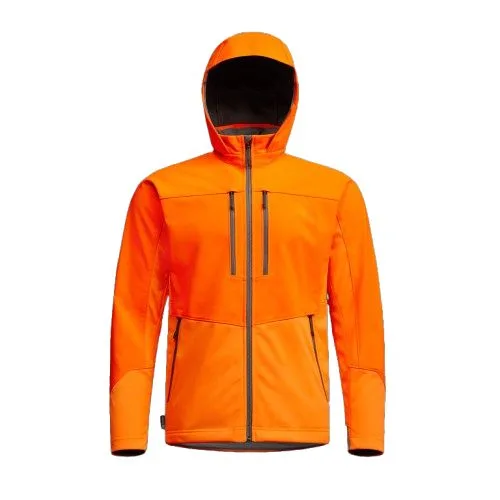
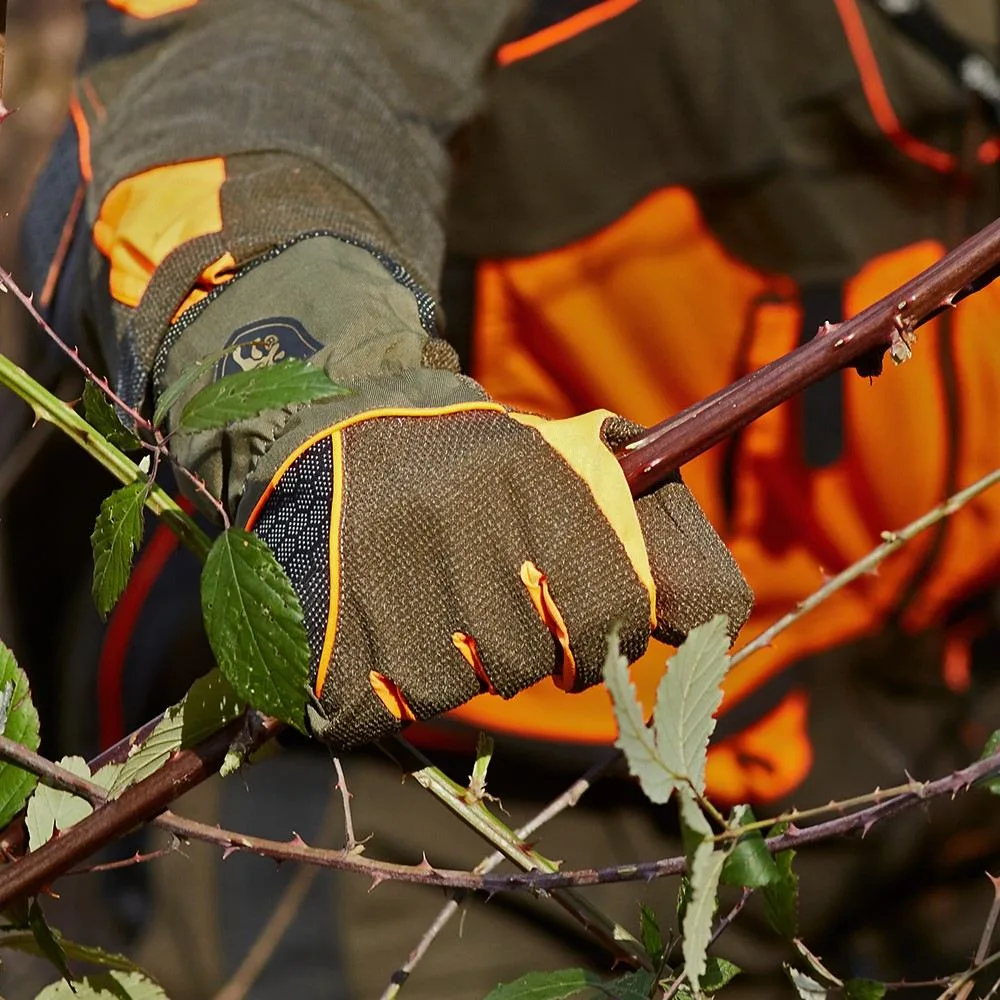
Need hunter orange? See the blaze orange line — or we can add blaze panels to any vest on this page. Minimums start at 30 pieces. Selling into Britain? Our clay shooting clothing for UK grounds page covers skeet and sporting cuts, club kit and individually named team wear.
Every shooting vest we hold
The current shooting and clay range, with reference codes. Any of these can be built to your specification from 30 pieces.
Shooting Vests (11)
- QS-SHO-VES-009Breathable Professional Shooting Vest
- QS-SHO-VES-004Elite Competition Mesh Shooting Vest
- QS-SHO-VES-001Elite Performance Clay Shooting Vest
- QS-SHO-VES-005Premium Quilted Mesh Shooting Vest
- QS-SHO-VES-006Pro-Series Ambidextrous Sporting Clay Vest
- QS-SHO-VES-011Pro-Series Competition Shooting Vest
- QS-SHO-VES-008Pro-Series Ventilated Shooting Vest
- QS-SHO-VES-002Professional Clay Shooting Mesh Vest
- QS-SHO-VES-007Professional Clay Shooting Vest
- QS-SHO-VES-010Professional Competition Shooting Vest
- QS-SHO-VES-003Sporting Clay Mesh Shooting Vest
Launch your shooting vest.
Send a sample vest, a sketch or a tech pack — we reply within 24 hours with fabric options, a per-piece quote and a production calendar. From 30 pieces.